Welcome to Barcelona / Welcome to Madrid

2018

Two light box, 66 x 50 cm each.
Edition of 3

Image “Welcome to Barcelona”: Pavilion of the Compañía General de Tabacos de Filipinas installed in the Parc de la Ciutadella in Barcelona, 1888.

Image “Welcome to Madrid”: Filipino “village” built for the General Exhibition of the Philippine Islands in the Retiro Park in Madrid and populated by indigenous people of different ethnicities and different animal species from the archipelago, 1887.

Welcome to Barcelona (2018) and Welcome to Madrid (2018) is welcoming to two cities in Spain, after two major expositions on the Philippines presented at the end of the 19th century. In 1887 the General Exposition of the Philippine Islands, promoted by the Overseas Ministry, took place in the Retiro Park in Madrid. In the general catalog the project was introduced explaining “Spain did not yet know what in foreign lands was the subject of study and praise”, despite being the metropolis after more than three hundred years of colonial rule. And he continued “The productions of that fertile soil, the works that reveal the privileged aptitude of their children for the arts all, the results of the influence of the metropolis in a colony never selfishly exploited, were known to us by references or fragmentary way.” (*) Good wishes were accompanied by a desire to show the strength of the domination of the archipelago, in a voracious propaganda attempt, just a decade before finally losing the colony. A year later, at the Universal Exhibition of Barcelona in 1888, the Pavilion of the General Company of Tobacco from the Philippines was presented, a company that represented one of the largest commercial interests overseas, founded by Marquis of Comillas, slave trader, businessman and shipping magnate.

This project reflects on the structural violence implicit in the political and economic strategies around colonialism, and on the phenomenon of universal expositions as a kind of vain cartographies conceived from the metropolis to exhibit countries and dominated cultures, as cabinets of curiosities and catalog of exoticism that did nothing but increase geographical and cultural distance. Under the pretext of scientific and anthropological interest, the positivist and suprematist gaze articulated around moral, racist, and economic interests was imposed. National stereotypes, images of power, institutional criticism or the euphemisms of progress are raised here through the displacement of the subject of contemplation: they are not images of the two host cities that welcome us, but are images of the vision that those two cities offered from the Philippines in the context of two great celebratory events.

Teresa Grandas
(Fragment of the text of the catalog of the exhibition Domènec. Not Here, Not Anywhere. Ateneo Art Gallery, Manila, 2019)

(*) Catalog of the General Exhibition of the Philippine Islands, Madrid, 1887.

* The 1/3 edition belongs to the collection of the Ateneo Art Gallery, Manila.
And the Earth will be Paradise

2018

Wood, Photo series.

Y la tierra será el paraíso (And the earth will be paradise), the title of this piece, is a verse from the most popular version in Spanish of the L’Internationale, the anthem of the working class par excellence, adopted by most of the socialist parties , communists and anarchists of the world. This verse perfectly sums up the utopian character of modernity, a time in which the idea that everything good was about to arrive was spread.

The project I “And the earth will be paradise” (2018) consists of a photographic series and wooden models that, stacked on top of each other, form a sculptural tower. These models represent the gigantic blocks of Social Housing Estate in La Mina, a neighborhood located on the outskirts of Barcelona that was built in the early seventies to rehouse the population from different shantytowns, and where the worst vices of impunity and political incompetence. Two archival photographs are shown next to these models; one, from 1970, shows the dictator Franco and the mayor of Barcelona posing next to the model of the La Mina neighborhood project, the other shows a group of women, relocated to this same neighborhood, holding the model of the their hut in Camp de la Bota, built by themselves with cardboard.

Again we see the image of power presenting itself in an overbearing manner as the benefactors of the population through large building campaigns, in front of the image of the victims of this power, the lowest classes of society, who appropriate the urban space making use of the few resources at their disposal.

The project is completed with a photographic series showing estates of large social housing buildings. Domènec, who has taken these snapshots in cities as diverse as Barcelona, Warsaw, Bratislava, Marseille, Nantes or Mexico City, does not indicate these origins. In this way, evidence of how the presence and aesthetics of this type of large housing projects, present on the outskirts of all major cities in the world, are a global sign of imposition from political and economic power.

Photos: Roberto Ruiz, courtesy of ADN Gallery, Barcelona

Domènec. And the Earth will be Paradise

From 19 January to 16 March 2019
adn galeria
C. Enric Granados, 49
08008 Barcelona

Domènec | Ni aquí ni enlloc

Visita de Domènec amb els i les alumnes de l’EASD Pau Gargallo de Badalona a l’exposició “Ni aquí ni enlloc”al MACBA amb motiu del futur workshop conjunt amb el M|A|C.


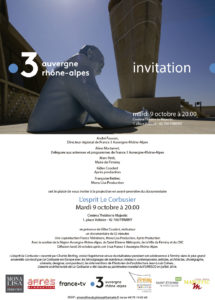
L’Esprit Le Corbusier

Mardi 9 octobre a 20.00 a Firminy la projection en avant-premierè du film “L’Esprit Le Corbusier”.

Le film de Gilles Coudert « L’esprit Le Corbusier » raconté par Charles Berling, croise l’expérience vécue du réalisateur pendant son adolescence à Firminy dans le plus grand ensemble construit par Le Corbusier en Europe avec les témoignages de nombreux créateurs contemporains, Jean-Louis Cohen, Daniel Buren, Xavier Veilhan, Frédéric Flamand, Dominique Perrault, Alain Dumas, Christelle Poyade, Pierre Grange, Neal Beggs, Philippe Avron, Kengo Kuma, Marc Barani, Pascale Jakubowski et Domènec, entre autres…

Domènec at Kochi-Muziris Biennale 2018

Kochi-Muziris Biennale 2018
Possibilities for a Non-Alienated Life
December 12, 2018–March 29, 2019
Kochi, India.

Expanded artist list
Aernout Mik
 (Netherlands), Akram Zaatari (Lebanon), Arunkumar HG (India), Anju Dodiya (India), Annu Palakunnathu Matthew (India/US), Anoli Perera (Sri Lanka), Araya Rasdjarmrearnsook (Thailand), BV Suresh (India), Bapi Das (India), Barthélémy Toguo(Cameroon/ France), Bracha Ettinger (Israel/France), Brook Andrew (Australia), Chandan Gomes (India), Chitra Ganesh (USA/India), Chittaprosad (India), Dennis Muraguri (Kenya), Domenec (Spain), EB Itso (Denmark), Goshka Macuga (Poland/UK), Guerrilla Girls (USA), Hassan Khan (Egypt), Heri Dono (Indonesia), Ines Doujak + John Barker (Austria + UK), Jitish Kallat (India), Julie Gough (Australia), Jun Nguyen-Hatsushiba(Japan/Vietnam), Juul Kraijer (Netherlands), KP Krishnakumar (India), Kausik Mukhopadhyay (India), Madhvi Parekh (India), Marlene Dumas (Netherlands), Martha Rosler (USA), Marzia Farhana (Bangladesh), Mrinalini Mukherjee (India), Mochu (India), Monica Mayer (Mexico), Nathan Coley (UK), Nilima Sheikh (India), Otolith Group (UK), PR Satheesh (India), Pangrok Sulap (Malaysia), Prabhakar Pachpute(India), Priya Ravish Mehra (India), Probir Gupta (India), Radenko Milak (Bosnia and Herzegovina), Rana Hamadeh (Netherlands/Lebanon), Rehana Zaman (Pakistan), Rina Banerjee (US/India), Rula Halawani (Palestine), Santu Mofokeng (South Africa), Shambhavi Singh (India), Shilpa Gupta (India), Shirin Neshat (Iran/USA), Shubigi Rao(Singapore), Song Dong (China), Sonia Khurana (India), Subhash Singh Vyam + Durgabai Vyam (India), Sue Williamson (South Africa), Sunil Gupta + Charan Singh (India/UK), Sunil Janah (India), Tabita Rezaire (France/French Guyana/South Africa), Tania Bruguera (Cuba), Tania Candani (Mexico), Tejal Shah (India), Temsuyanger Longkumer (India/UK), Thomas Hirschhorn (Switzerland/France), VALIE EXPORT (Austria), Veda Thozhur Kolleri (India), Vicky Roy (India), Vinu VV (India), Vipin Dhanurdharan (India),Vivian Caccuri (Brazil), Walid Raad (Lebanon/USA), William Kentridge (South Africa), Young-Hae Chang Heavy Industries (South Korea), Zanele Muholi (South Africa)

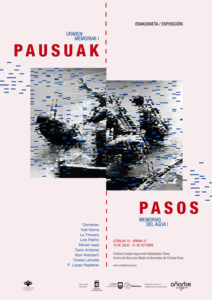
Pasos. Memorias del agua

Domènec, Kati Horma, La Trinxera, Loïs Patiño, Miriam Isasi, Taxio Ardanz, Ibon Aranberri, Teresa Lanceta y F. López Heptener

Del 19 de Julio al 21 de octubre de 2018

Fundación Cristina Enea
Donostia / San Sebastian

Monthly Archive:
May 2026
October 2025
August 2025
April 2025
January 2025
September 2024
March 2024
February 2024
April 2023
February 2023
January 2023
December 2022
November 2022
February 2022
December 2021
July 2021
April 2021
January 2019
December 2018
November 2018
October 2018
September 2018
August 2018
July 2018
June 2018
April 2018
March 2018
February 2018
January 2018
November 2017
October 2017
July 2017
May 2017
April 2017
February 2017
December 2016
November 2016
October 2016
July 2016
June 2016
May 2016
March 2016
November 2015
September 2015
August 2015
July 2015
June 2015
April 2015
March 2015
February 2015
January 2015
December 2014
November 2014
October 2014
September 2014
August 2014
July 2014
June 2014
April 2014
March 2014
February 2014
January 2014
December 2013
November 2013
October 2013
September 2013
August 2013
June 2013
May 2013
April 2013
March 2013
February 2013
January 2013
November 2012
October 2012
September 2012
August 2012
July 2012
June 2012
May 2012
April 2012
March 2012
February 2012
January 2012
December 2011
November 2011
October 2011
September 2011
August 2011
July 2011
June 2011
April 2011
February 2011
January 2011
December 2010
November 2010
October 2010
September 2010
August 2010
July 2010
June 2010
May 2010
April 2010
March 2010
February 2010
January 2010
November 2009
October 2009
September 2009
August 2009
July 2009
June 2009
May 2009
April 2009
March 2009
December 2008
November 2008